

The Beginning
Carbon Positive
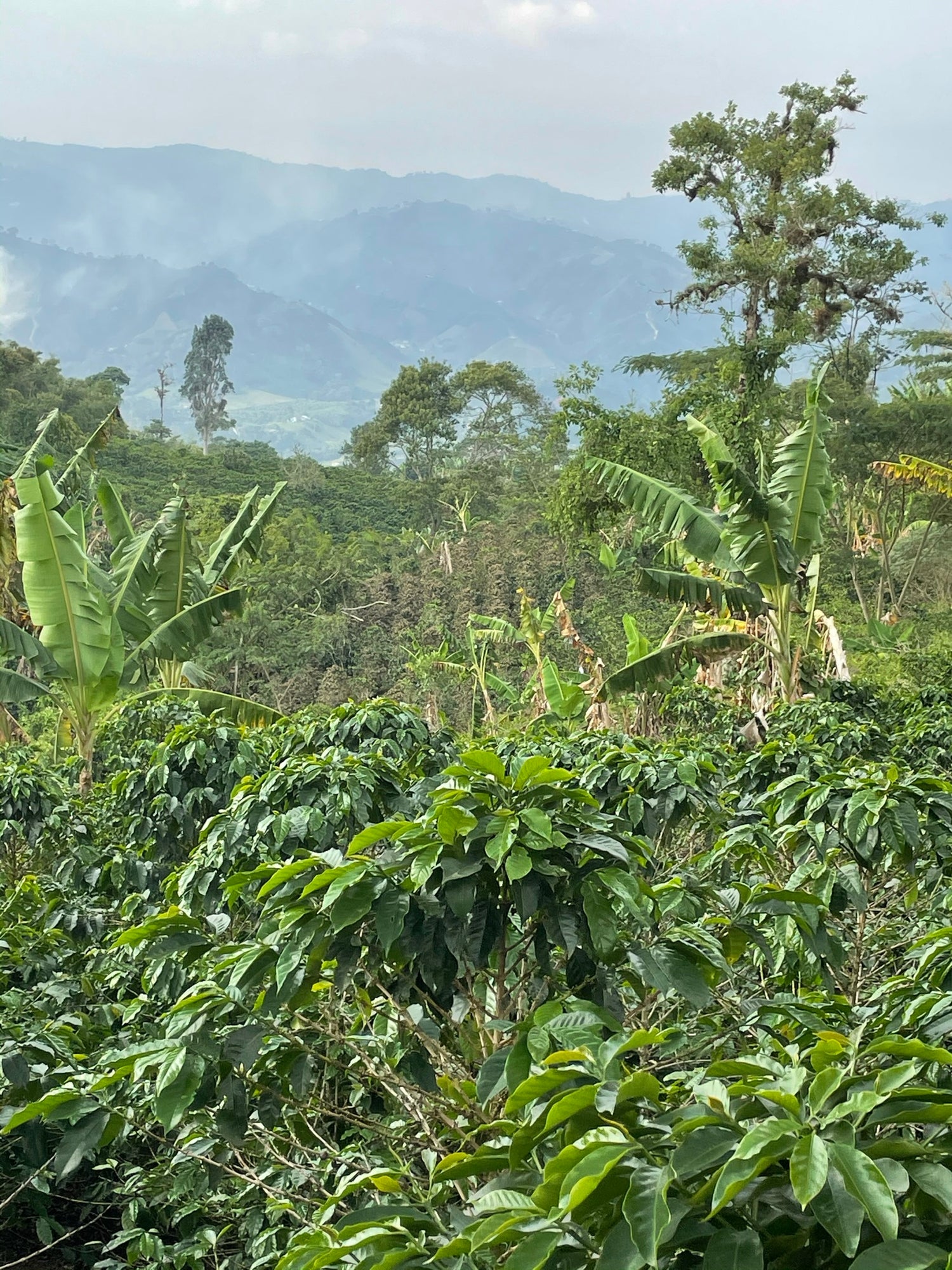
Coffee farms pull carbon out of the air. They are carbon positive. We are on the consumption end, so we will never honestly call ourselves carbon neutral by buying offsets that quietly claim the farmer's carbon as our own. We won't do that. Instead we destroy less, every way we can, and aim to be as carbon beautiful as possible.

Our Packaging
100% Recyclable
We spent the last year redesigning our coffee packaging from the ground up. We successfully separated the two main parts of a coffee package into their primary functions. So now the entire box and coffee card is 100% curbside recyclable, No stickers, no tape.
Our Mailer
Pulp and Soy
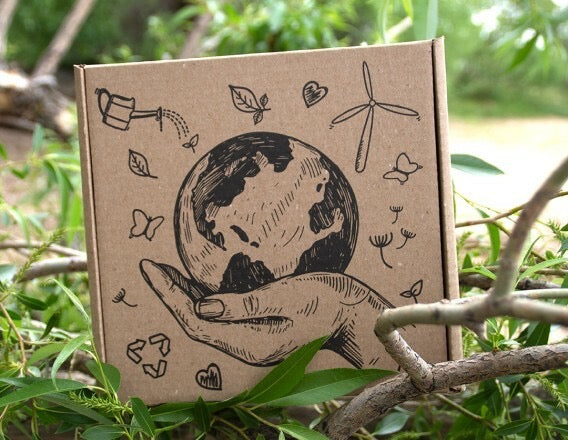
Our sturdy coffee boxes ensure your coffees arrive to you pretty and safe. They are also part of the circular economy. 100% recycled paper made with 95% post-consumer waste that has been diverted from landfills. And printed with HydroSoy Ink to complete the circular economy. Home recyclable and even better reusable.

Our Shipping Box
Boxes of Bamboo
When you order a bunch of bags of coffee from Torque they arrive in the Bamboo Box. These boxes are made mostly from bamboo (& some recycled wood pulp). Curbside recyclable, reusable (at least a couple of times) and compostable. Unbleached, FSC certified Bamboo (2/3) and recycled wood pulp (1/3). Water-based printing ink.
Renewable radness
No Tree Cups
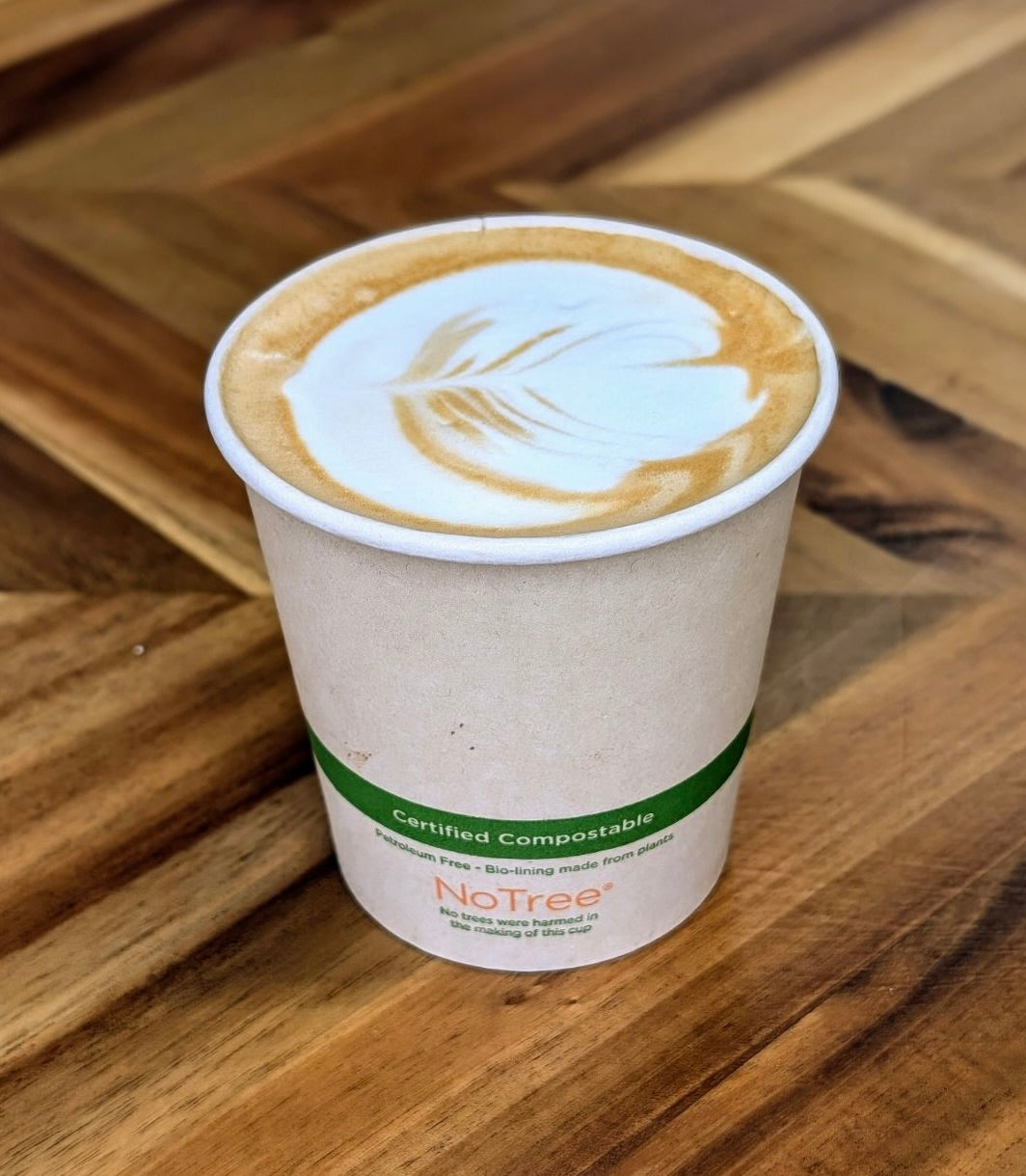
All our to go cups and lids, both hot and cold are No Tree - paper free! 100% bamboo so it renewable, compostable, biodegradable and sustainable. In fact all of our to go packaging is compostable and biodegradable. Straws, pastry bags and boxes, drink carriers and more.

Improve Your Footprint
Sustainability in Practice
We're committed to environmental sustainability with recycled, recyclable, biodegradable materials, eliminating single-use plastics, and 100% carbon-offset shipping. From bamboo cups to smart sourcing, we help your business shrink its carbon footprint and reach sustainability goals.

Full Circle
Economic Sustainability
Sustainability runs two directions here. Environmental: packaging, shipping offsets, bamboo cups. Economic: 20% of every bag back to the producer, every time. Both matter. Neither is optional. That's not a policy. That's just how we operate.

The Key
Close The Loop
Every bag you buy is carbon-offset shipping, compostable packaging, and 20% back to the producer. That's not a marketing claim. It's the math on every order.
Environmental Deep Dives
Why We Stopped Playing the "Compostable" Game
We used "commercially compostable" on our packaging for a while. We stopped because the data doesn't support the claim.
Here's what "commercially compostable" actually requires: a certified industrial composting facility has to accept the bag, process it under specific temperature and moisture conditions, and break it down into usable material. That system has to exist where our customer lives. In the United States right now, only about 11% of households have access to any program that can do that.
For the other 89%, the bag goes to landfill. And that's where it gets worse.
Landfills are anaerobic, meaning sealed and oxygen-free. That's the exact opposite of what composting needs. When organic materials break down in those conditions, they don't turn into compost. They generate methane, a greenhouse gas roughly 25-30 times more potent than CO2 over a 100-year period. A conventional plastic bag sitting inert in a landfill produces essentially no methane. A compostable bag in a landfill can produce more climate damage than the plastic it was supposed to replace.
There's a third problem. Consumers who try to do the right thing often put compostable bags in their recycling bin. That doesn't divert the bag. It contaminates the recycling stream, making it harder to process genuinely recyclable materials.
And a fourth. A standard pressure-sensitive label adhesive is a synthetic acrylic that won't break down under industrial composting conditions. It's classified as contamination. Some commercial composting facilities reject entire loads over a single non-compostable sticker on an otherwise certified compostable bag. Any roaster applying a conventional product label or branding sticker to a "commercially compostable" bag has voided the claim before the bag leaves the roastery. Most do.
So: a claim that works for 11% of customers, that may generate more greenhouse gas than conventional packaging for the other 89%, that contaminates recycling streams as a side effect, and that most brands are invalidating with their own stickers before the bag ships. That's not a sustainable packaging claim. It's a marketing claim the underlying system can't support.
Our packaging isn't perfect. We say what it actually is and what you can actually do with it. That's the standard we hold ourselves to.
Reference data:
- Composting access (11% of US households can divert compostable packaging from landfill): Resource Recycling / Sustainable Packaging Coalition — https://resource-recycling.com/recycling/2023/03/01/a-compostable-future/
- 35.9% of US population has any composting access; only 18.1% have access to programs that accept packaging: Sustainable Packaging Coalition 2025 research — https://sustainablepackaging.org/2025/10/01/new-composting-access-data/
- Methane generation from compostables in anaerobic landfill conditions vs. inert conventional plastic: Packaging Dive / PLA analysis — https://www.packagingdive.com/news/polylactic-acid-pla-bioplastic-compostable-packaging/728875/
- Compostable packaging landfill / methane overview: Plastic Reimagined — https://www.plasticreimagined.org/articles/when-compostables-work-and-when-they-dont
- Recycling stream contamination from compostables: Closed Loop Partners — https://www.closedlooppartners.com/what-to-do-with-compostable-packaging/
- Sticker/label contamination and facility rejection of compostable loads: Colorado Compostables Labeling Act FAQ — https://cdphe.colorado.gov/hm/compostable-product-labeling-act-faq / BPI Labeling Guidelines — https://bpiworld.org/labeling
- FTC Green Guides on deceptive compostable/biodegradable claims: https://www.ftc.gov/news-events/news/press-releases/2013/10/ftc-cracks-down-misleading-unsubstantiated-environmental-marketing-claims
- EcoEnclose honest assessment of compostable packaging limitations: https://www.ecoenclose.com/blog/the-truth-about-compostable-packaging
Our Packaging. What It Is. What You Can Do With It.
Torque ships coffee in two formats: a retail display box and a shipping box. Here's exactly what both are made of and what happens to them after you're done.
The retail box. A flat-packed cardstock box with a loose coffee card inside carrying all the product info. No stickers. No adhesives. Printed with low-VOC inks. The foil stamp is aluminum-based hot stamp, which dissipates completely in the paper re-pulping process and has no effect on recyclability. The whole thing goes in your curbside recycling bin.
The inner bag. A PET/PE laminate — PET outer layer, PE inner liner, same material family for the zipper and valve. Single-color, low-VOC ink print. No stickers. The bag and box are deliberately kept as two completely separate objects so each can go to the right place rather than being bonded together into a single mixed-material unit that has to go to landfill as one unsortable thing. The bag is a two-layer laminate, which means it does not have a reliable curbside recycling path in most US markets. We say that plainly because it's true, and because pretending a PET/PE laminate is curbside recyclable is exactly the kind of claim we're trying not to make. What it doesn't have: aluminum foil, metallized film, nylon layers, stickers, or adhesives. It is as simple a structure as we can build while still protecting the coffee. Check locally for your specific program, but don't expect curbside.
The shipping box. 100% curbside recyclable cardboard. Self-sealing, no tape. The shipping label is BPA-free thermal paper.
What we don't use anywhere. No tape. No stickers. No added adhesives.
This matters more than it sounds. A standard pressure-sensitive label adhesive is a synthetic acrylic that will not break down under industrial composting conditions. It is classified as contamination. Some commercial composting facilities reject entire loads over a single non-compostable sticker on an otherwise certified compostable bag. Roasters who print "commercially compostable" on their bag and then apply a product sticker to it have voided the claim before it leaves the roastery. We don't use stickers anywhere, which means nothing we ship creates that kind of problem downstream, regardless of how it gets sorted.
Nothing in here is a sustainability claim. It's a list of what the materials are and where they can go.
No Tape. No Stickers.
Tape and stickers are the quiet contaminants of paper recycling. Pressure-sensitive adhesives — the kind on every shipping tape roll and product label — are synthetic acrylics designed to bond permanently. They don't let go in the re-pulping process. They gum up de-inking equipment, leave adhesive residue in the pulp slurry, and force recycling facilities to either downgrade the batch or reject it entirely. A cardboard box that arrives at a MRF wrapped in packing tape is still technically cardboard. In practice it's a problem the facility has to manage, and many don't — they landfill it instead. The tape that costs a few cents per shipment can doom the entire packaging chain it's attached to.
Stickers have the same problem on a smaller scale, with one additional wrinkle for anyone making compostability claims. A standard label adhesive won't break down under industrial composting conditions. It's classified as contamination. Commercial composting facilities have begun rejecting entire loads over a single non-compostable sticker on an otherwise certified compostable item. So a bag that earned a composting certification in a lab loses it the moment someone applies a product label in the roastery. It's a problem the industry largely ignores because the sticker is small and the claim is on the bag, not the label.
We don't use tape or stickers on any consumer-facing packaging. The retail box is flat-packed cardstock that assembles without adhesive. The shipping box is self-sealing. The inner bag carries a single-color printed ink mark, not a label. The one exception is large wholesale boxes, where structural requirements make tape necessary and we use it there. These aren't particularly heroic decisions — they're just what you end up with when you follow the material all the way to the end of its life and ask what actually happens to it there.
One Package, Two Materials, Two Separate Fates
Most retail coffee packaging combines materials into a single unit and calls it a day. The standard specialty coffee bag is a multi-layer laminate — typically PLA or foil bonded to kraft paper or plastic film — with a one-way valve crimped in, a zipper heat-sealed across the top, and a product sticker applied over all of it. It photographs well. The problem shows up at end of life, when a material recovery facility receives something that is simultaneously bioplastic and kraft paper and aluminum and adhesive and cannot be processed as any of them. Multi-layer laminate coffee packaging almost always goes to landfill, not because recycling failed but because the packaging was never actually designed to be recycled. The "commercially compostable" claim printed on the outside doesn't change the math — it just describes what the PLA layer would do under industrial composting conditions that 89% of customers don't have access to, while the sticker on top voids the certification anyway.
We keep the box and the bag as two completely separate objects on purpose. The box is paper. The bag is PET. Neither is glued, laminated, or bonded to the other. When you're done, you separate them in about two seconds and each goes to the right place. It costs us more to design and produce packaging this way. It's less visually seamless than a single integrated unit. Those are the tradeoffs and we made them deliberately, because the alternative was packaging that looked sustainable and wasn't.
That same logic pushed us further. The inside of the retail box is printed with our brew guide and espresso guide, so the box itself becomes a reference document before it becomes recycling. The coffee card inside does four jobs: it's the product info insert in the box, the retail shelf tag, the airport and espresso hopper sign, and the tasting card at cuppings. One printed piece, four uses, printed once. The result is we produce roughly a quarter of the printed collateral a typical roaster generates for the same number of SKUs. Reduce first. Reuse what you made. Recycle what's left. In that order, because that's the order that actually matters.