Collection: Negusse Debela | Ethiopia
Negusse Debela used to sell computer parts. He built a solid business doing it, one that had nothing to do with coffee at all. Then he took a trip to Minnesota, sat down at a café, and ordered a pour-over. That one cup rerouted his life. He came home to Ethiopia and spent months touring processing sites across the south, learning the farming and the fermentation tanks and everything in between, until he had enough to start his own company. He founded SNAP Specialty Coffee in 2008, aiming to build one of the highest quality export operations in the country.
SNAP's first site sits in Worka Chelbessa, a kebele that was already turning heads among specialty buyers by the time Negusse arrived in 2017. Two years later he expanded again, buying a second station a few kilometers away in a sub area called Danche. Both run the traditional Ethiopian process, cherries submerged fully underwater for 36 to 48 hours, sometimes longer, breaking down the mucilage before the parchment ever sees a raised bed. The team has also experimented with dry fermentation, pulping first and letting the coffee sit without water for the same window. Either way, the coffee dries slow, 10 to 14 days up on the beds, which is where the floral lift and the citric snap in this cup come from.
Gedeb is the southernmost woreda in the Gedeo Zone, the greater area most people know by the name Yirgacheffe, a town that put washed Ethiopian coffee on the map decades ago. Coffee is younger here than in the northern parts of that zone. Most farms are only one or two generations into growing it, trees at 20 to 30 years old, plots averaging a modest 1.5 to 2 hectares tucked between 1900 and 2200 meters of elevation. It is not the oldest ground in Ethiopia. It just happens to produce some of the region's most sought-after lots, and Negusse built his company betting on it early.

Collapsible content
Farm Info
-
Cocoa Drop
Regular price From $17.50 USDRegular price -
Honey Drop
Regular price From $18.20 USDRegular price -
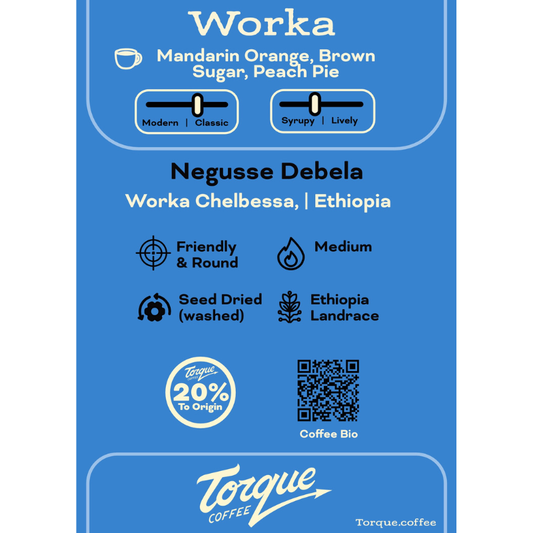
Worka Chelbessa - Negusse Debela, Ethiopia
Regular price From $18.50 USDRegular price -
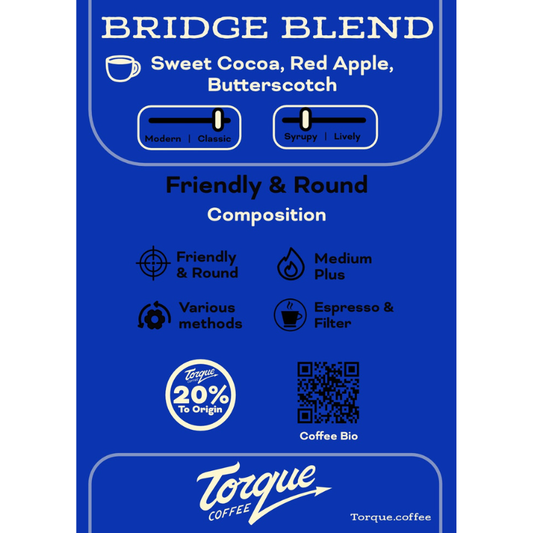
Bridge Blend - Grondin Community Bridge Composition
Regular price From $18.90 USDRegular price